
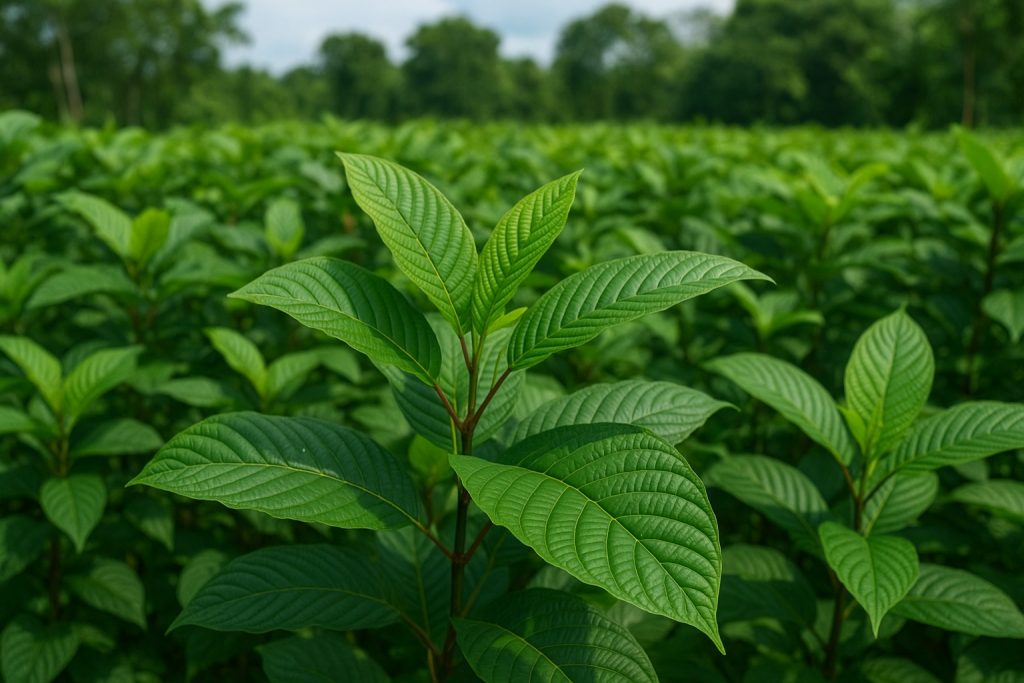
Kratom, or Mitragyna speciosa Korth., is a tropical plant from the Rubiaceae family, which also includes coffee. Although found across Southeast Asia, the largest population of kratom grows in Kalimantan, Indonesia. Locally, it is known as ketum and purik in West Kalimantan, kayu sapat in Central Kalimantan, and kedamba in East Kalimantan.
Physical Characteristics of Kratom
Kratom is a strong tropical tree with a deep taproot and broad, glossy leaves. Its trunk can reach a diameter of up to 0.9 meters at the age of 10–15 years. The plant’s round flowers grow at the ends of its branches, making it easy to recognize. Kratom thrives in moist and swampy areas, especially along riverbanks. In East Kalimantan, kratom is commonly found in Kota Bangun and along the Karang Mumus River in Samarinda.
Benefits and Traditional Uses
For generations, the people of Kalimantan have used kratom leaves to reduce fatigue and boost energy. According to the Journal of the Ministry of Health, kratom is recognized as a natural body supplement. Communities also brew kratom tea to help with diarrhea, muscle pain, and mild depression.
Rina Wahyu Cahyani from the Ministry of Environment and Forestry explains that kratom’s benefits come from two active compounds: mitragynine and 7-hydroxymitragynine. At low doses, kratom acts as a stimulant similar to caffeine, while at higher doses it has sedative and pain-relieving effects.
Economic Value of Kratom
Kratom has become an important economic commodity in Kalimantan, especially in Kapuas Hulu Regency. Fresh kratom leaves are sold for Rp 1,500–3,500 per kilogram, while dried leaves reach Rp 17,000–27,000 per kilogram. Between 2015 and 2018, kratom exports from West Kalimantan reached 4,800 tons, generating approximately Rp 49.2 billion in income for local farmers.
Risks and Side Effects
Despite its benefits, kratom also carries potential health risks. Misuse of kratom can cause dependency or addiction. The National Narcotics Agency (BNN) has stated that kratom’s risk level may be higher than that of marijuana or cocaine. Further research is needed to better understand the long-term side effects of kratom use, especially in traditional practices.
Legality of Kratom in Indonesia
Currently, kratom is still legal to cultivate and trade in Indonesia. However, the Food and Drug Administration (BPOM) prohibits its use as a traditional medicine or food supplement. In the future, kratom could be classified as a Schedule I narcotic, which would lead to the banning and destruction of kratom plants and products.
Conclusion
Kratom is a plant with great potential in both health and economic sectors. However, the risks of abuse and potential legal restrictions present serious challenges. Continuous scientific research and clear regulations are essential to balance kratom’s benefits and its risks — ensuring this valuable plant remains beneficial for both people and the environment.